College Athletes Can Now Afford Corvettes
The topic for my digital essay will revolve around the use of NIL in college athletics. I will focus on valuations of athletes that were calculated by a third party by analyzing various aspects. I was led to this topic as I am a college athlete and I constantly hear about NIL but not many people fully understand what it is. This led me to dive deeper into it and I am now intrigued to see if there are trends that could cause an athlete to gain a higher valuation.
There are 5 potential research questions I would like to look at that are all based on the valuation of an athlete. 1) Does gender impact the valuation of a college athlete’s NIL? 2) Does the school or conference an athlete competes for impact NIL valuation? 3) How do the valuations of athletes in mainstream sports compare to athletes in less popular sports? Finally, 4) how does the amount of followers an athlete has on social media impact their valuation, and what other factors play into how much an athlete can make off of NIL?
A data tool I really want to use in this essay is Tableau. I am taking another class on tableau so I am hoping I can showcase what I learned in that class in this project. I plan on mostly making my own dataset consisting of the top 100 athletes valuation and other data on them such as school, conference, sport, gender, social media following, and more. Another tool I want to use is a timeline in my introduction which will show how NIL came into play a couple of years ago since it was a process over several years.
I have done research by reading tons of articles online and also diving deeper into scholarly papers. One paper I found is put out by a student in the Seton Hall Law School where he writes about how the introduction of NIL in sports has made the business model unsustainable and he talks about potential fixes to make it sustainable again (Lincoln, Joseph . “Financial Transparency in College Athletics: How to Save College Sports from Becoming the Monster It Created and Forge a Path of Sustainability,” n.d. ). I have also searched for databases on NIL and while I have not found a database itself, I believe I have found enough information and data to create my own.
Schedule
- Prepare outline
- Collect data and make dataset
- Write draft on introduction to NIL
- Create visuals through tableau and a timeline
- Analyze data
- Take what I analyzed and turn it into writing for the essay
- Proofread
Annotated Bibliography
Chen, David W., Jacey Fortin, and Anna Betts. “N.C.A.A. Athletes’ Pay Deal Raises Questions About Future of College Sports.” The New York Times, May 25, 2024, sec. U.S. https://www.nytimes.com/2024/05/24/us/ncaa-payments-athletes-reaction.html.
The point in this article that caught my eye is the idea of whether women will be compensated fairly when compared to men when it comes to NIL deals. Gender discrimination has forever been a huge topic and now with a lot of money on the table in college athletics, how will the money be divided. The article got me thinking about this important topic that I did not yet think about and could perhaps be a portion of what my paper is about.
Cherullo, Dylan C. “Evaluating the Effect of NIL Laws on College Athletic Department Revenue,” n.d.
The thesis here explores whether the effect of NIL laws on college athletics will have an effect on the college athletic department’s revenue. After analyzing panel data from 350 universities, Cherullo came to the conclusion that the new NIL regulations would not have a significant impact on revenue for athletic departments. This paper could be useful in my essay as I want to explore the finances of college athletics post NIL and having data on revenue before and after NIL could be important.
Harris, Hailey A., Natasha T. Brison, and Marlene A. Dixon. “Hidden Consequences: Examining the Impact of NIL on Athlete Well-Being.” Journal of Applied Sport Management, 2021. https://doi.org/10.7290/jasm13r7xo.
The articles examine the impact that NIL could have on the lives of college athletes. Student athletes will now have a lot more to juggle with the addition of a lot of money and the importance of these athletes being educated on how to handle this mess is important. There are so many things that could go wrong when you throw a lot of money in the mix. The article brings into a lot of considerations that I have not thought about and could steer my paper a certain direction.
HOK. “NIL’s Impact on College Sports from a Funding, Facilities and Student-Athlete Perspective,” January 24, 2025. https://www.hok.com/news/2025-01/nils-impact-on-college-sports-from-a-funding-facilities-and-student-athlete-perspective/.
This article dives into how college sports will fund NIL money and how this will effect other parts of the athletic organization such as facilities. The article talks about the NIL collective which is very important to be educated on if you are interested in how NIL operates. I can use the information from this article to help guide my explanation of where NIL money comes from and how this is changing all aspects of college athletics.
“NCAA and N.I.L Money: How Much Do Athletes Make? – The New York Times.” Accessed February 18, 2025. https://www.nytimes.com/interactive/2024/08/31/business/nil-money-ncaa.html?searchResultPosition=5.
This article has a lot of data and visuals on the expected earnings of college athletes. The visuals are very effective and it also dives into non revenue sports which is very interesting to me. The impact of NIL on the sports outside of football and basketball will be huge but what that will look like in the long future I do not know. In my paper I want to focus some of it on non revenue sports and the statistics provided by this article will assist me.
Parme, Michael Henry. “Increasing Competition: The Impact of NIL on the NCAA’s Monopsony Power in the Labor Market,” n.d.
The paper focuses on how NIL policies will reshape the labor market connected to college athletics. With more money available to athletes, more competition will arise in all aspects of college athletics. Whether that is the athletes competing against each other for brand deals or agencies looking to hire on athletes as clients. The paper explores a wide variety of topics that will help me in writing my paper as the effects of NIL are still not fully known.
“Paying College Athletes | Pros, Cons, Debate, Arguments, Sports, Compensation, and Education | Britannica.” Accessed February 18, 2025. https://www.britannica.com/procon/paying-college-athletes-debate.
The writing here is a pro vs con argument of the effects NIL will have on college athletes. It brings up good points for NIL and against NIL. It got my mind thinking about both sides of NIL and I could see myself using some of the general arguments made here in my paper. I would dive much more into detail for each topic though.
Temple Now | news.temple.edu. “Is NIL a Good Thing or a Bad Thing? Sports Industry Expert Weighs In,” June 25, 2024. https://news.temple.edu/news/2024-06-10/nil-good-thing-or-bad-thing-sports-industry-expert-weighs.
This is just a article put out by Temple University that gives a good breakdown of what NIL is. It provides a good breakdown of how NIL works and the basic changes it will make to college sports. Involvoning some of the basic framework in my paper is necessary as not everyone is educated on what exactly NIL is and the general effects it has had and will have.
Lincoln, Joseph . “Financial Transparency in College Atheltics: How to Save College Sports from Becoming the Monster It Created and Forge a Path of Sustainability,” n.d.
This will be a very important paper when it comes to my paper. The paper talks about the growing gap between large school and smaller schools in division 1 athletics. The paper goes into the finance side of things about the spending habitis, revenue, and other important financial numbers for college athletics. Doing a deep dive into the number will help me coordinate my paper on the exact topic I want to focus on.
Warren, Nicholas Rhea. “THE ECONOMIC FEASIBILITY OF PAYING COLLEGE ATHLETES,” n.d.
The honors thesis explores whether paying college athletes is sustainable. His conclusion is very interesting as he finds that very few D1 programs would be able to afford to pay each athlete a small salary, especially for schools that are in non-power 5 conferences. This was something I always wondered and looking into the numbers produced in this thesis could be interesting and provide me insight into how much universities would actually be able to pay athletes.
There’s How Much Money in College Sports?
Evan Lindner 3/17/2025
Overall, I thought our meeting went really well. I came into the meeting having a very broad topic and my goal was to narrow the topic to a more specific idea. We talked a lot about how I could organize an essay about NIL since it is a fairly new topic in the world of sports. I think I’m going to find a dataset on the top-paid athletes in college through NIL and analyze how their school, sport, gender, and social media impact the types of brand deals they receive through NIL.
Another thing we talked about during the meeting was how I should organize the essay. I am going to start the essay by giving a breakdown of what NIL is specifically since a lot of people don’t yet understand it or the details of how it works. We even talked about how I could potentially use a timeline to map out how NIL came into existence. From there I will dive deeper into my topic talking about the findings I have found through my research. I will incorporate graphs hopefully from Tableau to help support my paper. In the last part of the meeting we talked about ways I can find datasets to support my paper. Although it won’t be easy, I think there are datasets out there that I am looking for. We also talked a little bit about how I can even make my own dataset by collecting data on the top 50 NIL earners in college.
Students Fund D1 Athletic Programs
Evan Lindner 02/13/2025

Source: Sportico’s college sports finances database
What is this visualization trying to convey? Is it successful? Does it convince you? Why or why not? Would the piece work without the visualization?
The visualization I chose reveals the average amount a student pays each year as a fee to the athletics program at their college or university. The goal of the visualization is to show how schools that are members of lower-prestige athletic conferences tend to have a larger athletics fee to fund the athletic programs. I would say that the visualization is fairly convincing as the data is organized and it is very easy to see the difference in how much variance there is in athletic fees. Without the visualization the message would not come across as effective in the article. I am someone that likes to see numbers and evidence when you are trying to make an argument so if the article did not include this graphic then it would have been much harder for the author to get his message across.
Does the style suit the data? How so? What other visualization styles would work?
I do think the style of this visual fits the data. I like how the data is separated by conference and color-coded this way. The visual is also organized where the conference with the lowest average fee is on the left and the conference with the highest average student athletic fee is on the right. There are however a few ways I think this visual could have been more effective. First, I think a table with stats such as the exact average amounts, school size, and other statistics would provide even more detail that could be important. Another visual that could be interesting is a data visual that includes the total amount of student athletic fees collected by a university instead of an average.
Who made this visualization? What is their background?
The visualization was made by the news company Sportico. Sportico is a popular news company where people go to see articles on the business side of sports. I would say it is a pretty trusted website.
Who is the audience and what is the context (publication, website, etc.)?
The audience of this graphic is people who are interested in the finance side of sports. I found this graphic through a twitter post that an account made to talk about athletic budgets and bring more attention to the fact that students pay fee to fund sport programs. So the data was originally posted on the Sportico website but then reposted on social media.
What is source of the data of this visualization? Can you find the original data set? Try hard! Where did you look? What format is it in?
I found the origiial data set but it is behind a pay wall on sportico. However I believe Sprotico collected the data by looking through each public universities financial statements to get the numbers. So I could find this data by going through each university’s financial statements.
How might this data be subject to the biases of its authors? Where are the binaries or hierarchies?
This data could have some biases. First not every D1 public college is listed in the graphic. Perhaps they left some colleges out because it did not fit their message. I would be interested to see the data with all D1 athletic programs.
What else could be done with this data set? Other research questions? Other visualizations?
Something I would like to look into is the opinions of students at these universities that are paying these athletic fees. What is the max price they would be willing to pay for their athletic programs. Also, if given the choice would these students voluntarily pay the fee if given the choice. My guess is no but by not paying these athletic programs would fall apart financially.
MovieIT
Evan Lindner 2/05/2025
A new app just hit the market named MovieIT which features a newly advanced generation of AI that has never been seen before. You download the app and pay the small monthly subscription price because your friends have started to recommend it. The first thing the app asks you when you enter it is a couple of questions about how your day is going and what you are interested in watching. After a short questionnaire, the app brings you to a two-hour movie that you have never heard before. In fact, no one has heard of this movie before because it was created 2 seconds ago exclusively for you. The movie features your favorite actors and the soundtrack perfectly matches your Spotify listening. You sit and watch the movie and it ends up being a life-changing experience as the movie hits all the emotions you wanted.
While this seems crazy to think about right now, something similar to this is likely to happen in the future. AI is constantly learning to have better interactions with humans on a daily basis at a rapid pace and it is only a matter of time before AI knows how to manipulate humans in some manner. Hopefully in a positive way. The hypothetical app I created would hopefully have a positive impact on society as it would get rid of the problem of endlessly scrolling Netflix to find a movie to enjoy. There would need to be some precautions in the app’s programming to make it safe, AI generating media on politics is a little sketchy and would need to be paid attention to prior to releasing the app to the public.
The app would be more than just a movie generator as there are several other features. The first is the opportunity to save the film made for you and share it with friends. Think of it as a social media where people come to comment on others’ generated movies. If you enjoy a movie as a whole, you can choose the option to create a sequel or if you don’t enjoy the movie, you hit the thumbs-down button so the algorithm creates fewer movies like that one. The app will use user input to improve the quality of movies generated and eventually, it will get to the point where all movies created are enjoyed by the viewer. MovieIT would be something I would use in a second as I always fall victim to scrolling through apps hoping to find a video that sticks out to me. Having this work done for me would be an absolute dream.
An Accountant and a College Athlete Walk Into a Bar…
Evan Lindner 2/03/2025
I have a couple of ideas for what I want to write about for my digital essay. As someone who does a sport at W&L, I am of course very interested in the college athletics world. The world of college sports is changing before our eyes with NIL money affecting nearly every single Division 1 athletics department in the country. As an accounting major and sports fan, the finances of college athletics are right up my alley. College athletics tends to make all their decisions behind their football and basketball programs, which often leads to other sports being annoyed and often underfunded or underresourced. I think using the concepts of searching the web in this class, I can create an essay that can help explain why college athletic programs make the decisions they do. After all, everything can typically lead back to money.
The finances of college athletics is a pretty broad topic so I have a couple of ideas for more specific topics. The first idea is to focus on college football and media deals. A good portion of revenue from college football comes from media deals to broadcast games so researching the ins and outs of these deals could reveal some interesting things. My second idea is to focus on the spending problem many teams face. Most D1 college athletic departments operate at a loss due to the extreme spending they do. The extreme spending is done in several categories whether that is the building of new facilities, paying coaches a lot, or high traveling costs. The third idea I have been thinking about is the effect of NIL on the college landscape. A few years ago athletes were first allowed to profit on their name, image, and likeness and since then, college athletes have taken great advantage of this. Whether that is multi-million brand deals or something as small as getting a free sandwich at a local deli.
I can use what I learn in this class to help with organizing my research for the essay. Learning about how the different search engines on the internet work will be advantageous when it comes to finding the information and articles I want to help support me when writing my paper. Learning how to present and organize data in this class will also help me in my research. I am also taking a tableau data visualization class right now so hopefully I can find sets of data where I can use tableau for some visuals. While I am not fully set on my topic for my essay, this is where my head currently lies.
Yo I’m Coding or Something Like That
The Big Mysterious World of Evan
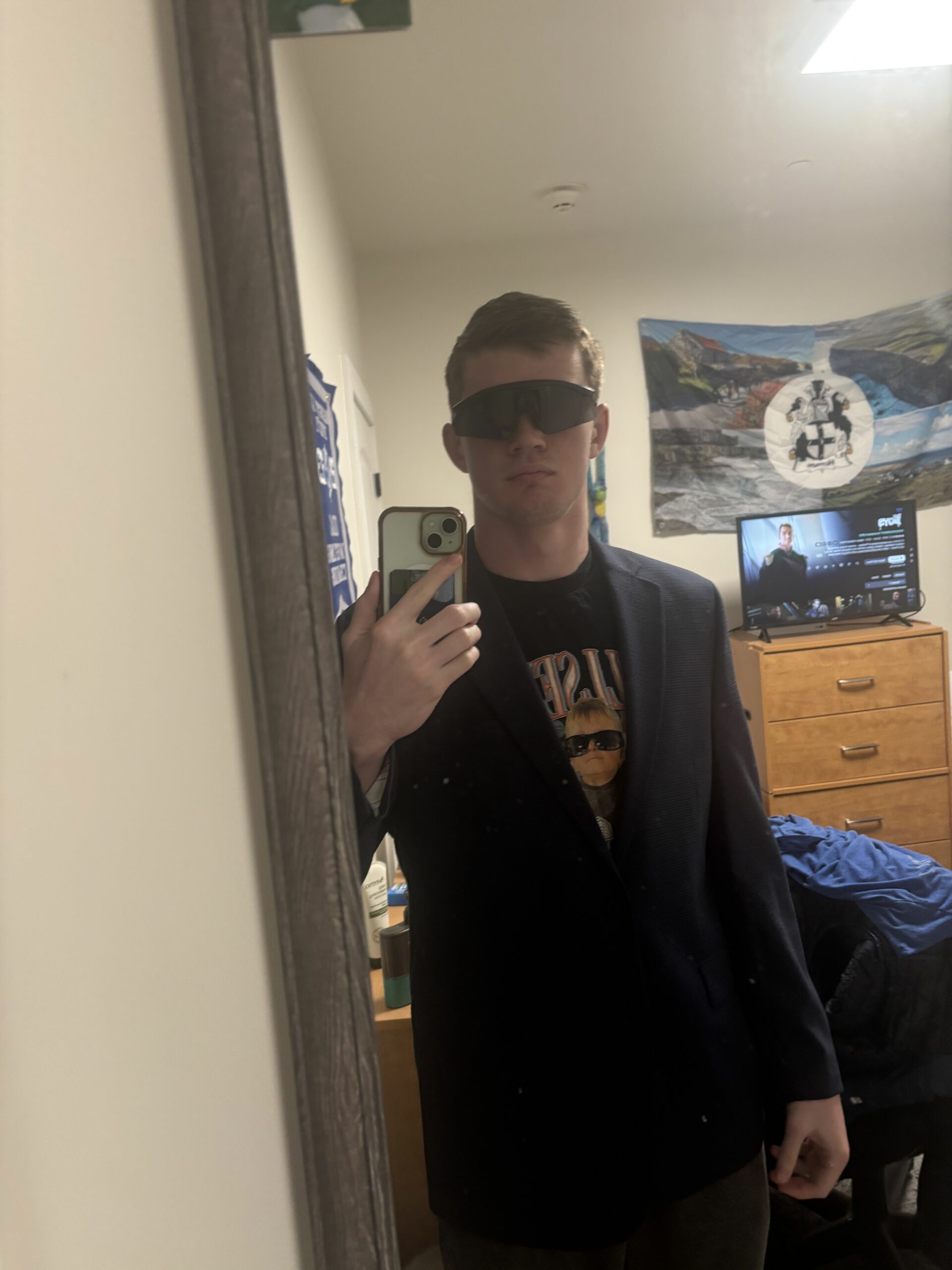
Photo taken by Evan Lindner
You may be wondering who this man is, however the real question is who isn’t this man?
My name is Evan Lindner and I’m current junior at Washington and Lee University who is majoring in Accounting and a member of the wrestling team. Below I’ve provided a couple of things that will allow you yo get to know me better.
A guide for the most important thing on the planetJust some of my favorite Cookout milkshake flavors
- Banana Pudding
- Oreo
- M&M
- Peanut Butter
- Mint
- Cheesecake
The greatest foods to ever exist (definitely not my opinion)
- Tacos
- Steak
- Fries
- Milkshake
- Bagel Bites
My Pets
| Pet Name | Type of Pet | Age |
|---|---|---|
| Charlotte | Dog | 10 |
| Vincent Ziccardi | Dawg | 21 |
| Darcy | Dog | 5 |
This webpage is a work in progress but as we progress you will get an insight into what goes on in my head on the normal day.
It’s a Bird, It’s a Plane, It’s the Data Center Building!!
Evan Lindner 1/27/2025
Where does our internet come from? Quite frankly, I do not fully understand how the depths of the internet work but that does not mean I can’t figure out where our access to the internet comes from. The start of this journey began in my apartment, where I started looking around for the wireless extender that provides my apartment with access to the internet. Even though the device is in a very obvious spot on the ceiling of my main hallway, it was something I never took note of. Perhaps, as a society we are so used to having wifi routers around, we don’t even pay attention to them anymore. So it is safe to assume that most buildings on campus have several of these Arube wireless extenders to improve internet speeds around campus. However, now the question is where is the source of the internet on campus.
This part of the investigation required research online. After looking at a campus map, I noticed a building next to the law school parking lot called the data center. I would say goldmine because that was the exact answer I was looking for. The data center is kind of hidden in a part of campus that gets little to no walking traffic and as a result, the building is unknown to most students and probably faculty on campus. I decided to take a walk down to the data center and found the building to be a little depressing in a way. There were no cars in the parking lot so I assumed no one was in the building and the building truly is hidden to the corner of a parking lot that only law students use.
I felt that going into the data center was probably not the best idea so I investigated the outside of the building instead. What I observed was that the cooling systems and generators are huge for a building that is not big at all. The cooling systems are necessary as the building probably stores amounts of data that is beyond me even making a prediction. All this data without a big cooling system would overheat in a second. So my conclusion is that most of the internet we use on the campus here stems from sources in the data center near the law school parking lot. However, what is in the tunnels under campus remains a mystery and I would not be surprised at all to find data storage areas in the tunnels somewhere. Also, what happens if this data center has an accident, I would imagine the university has a backup area somewhere in case of an emergency. Or would the campus fall apart with an accident occurring at the data center?

Wireless Extender in apartment
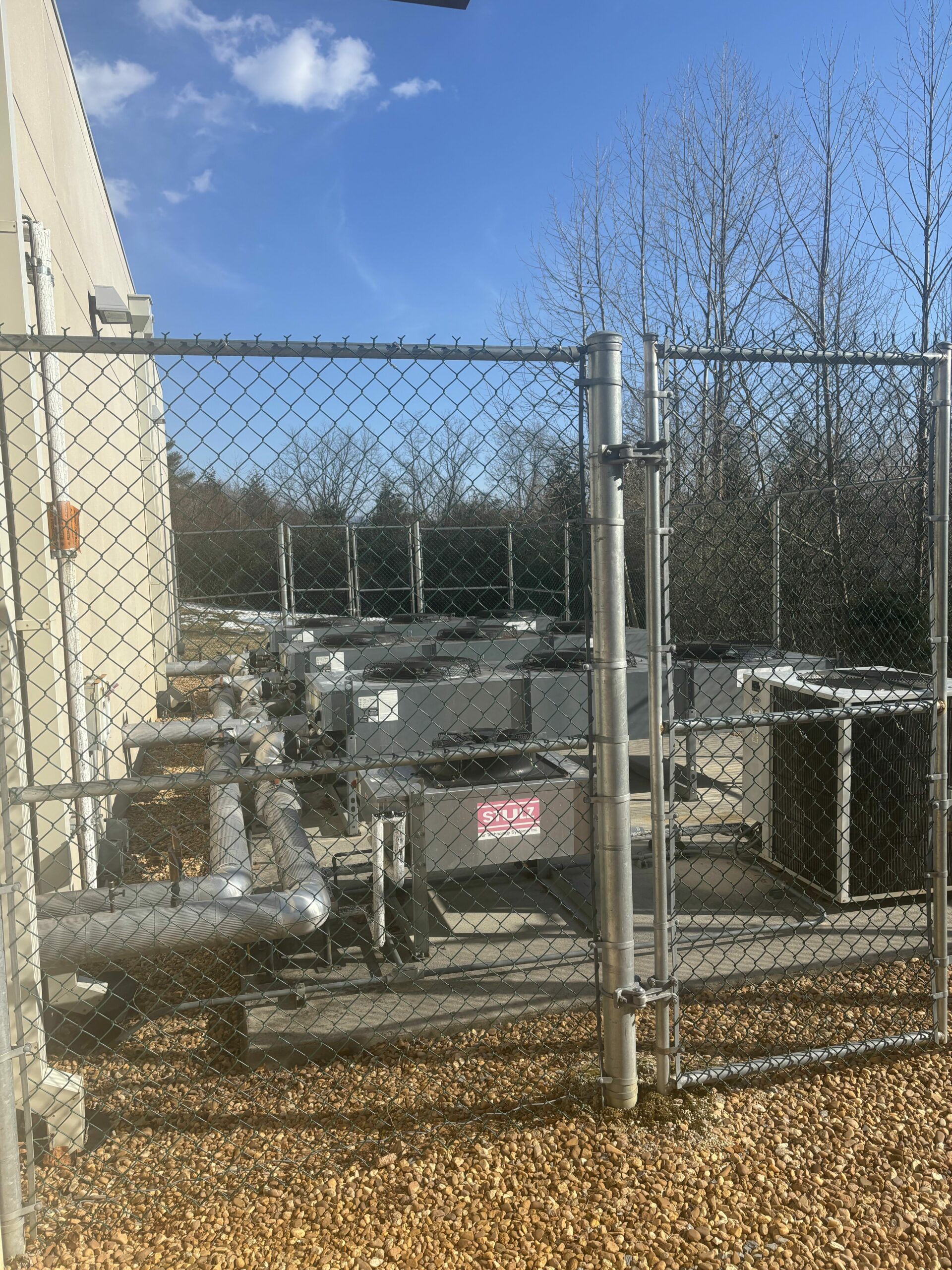
Cooling system outside Data Center
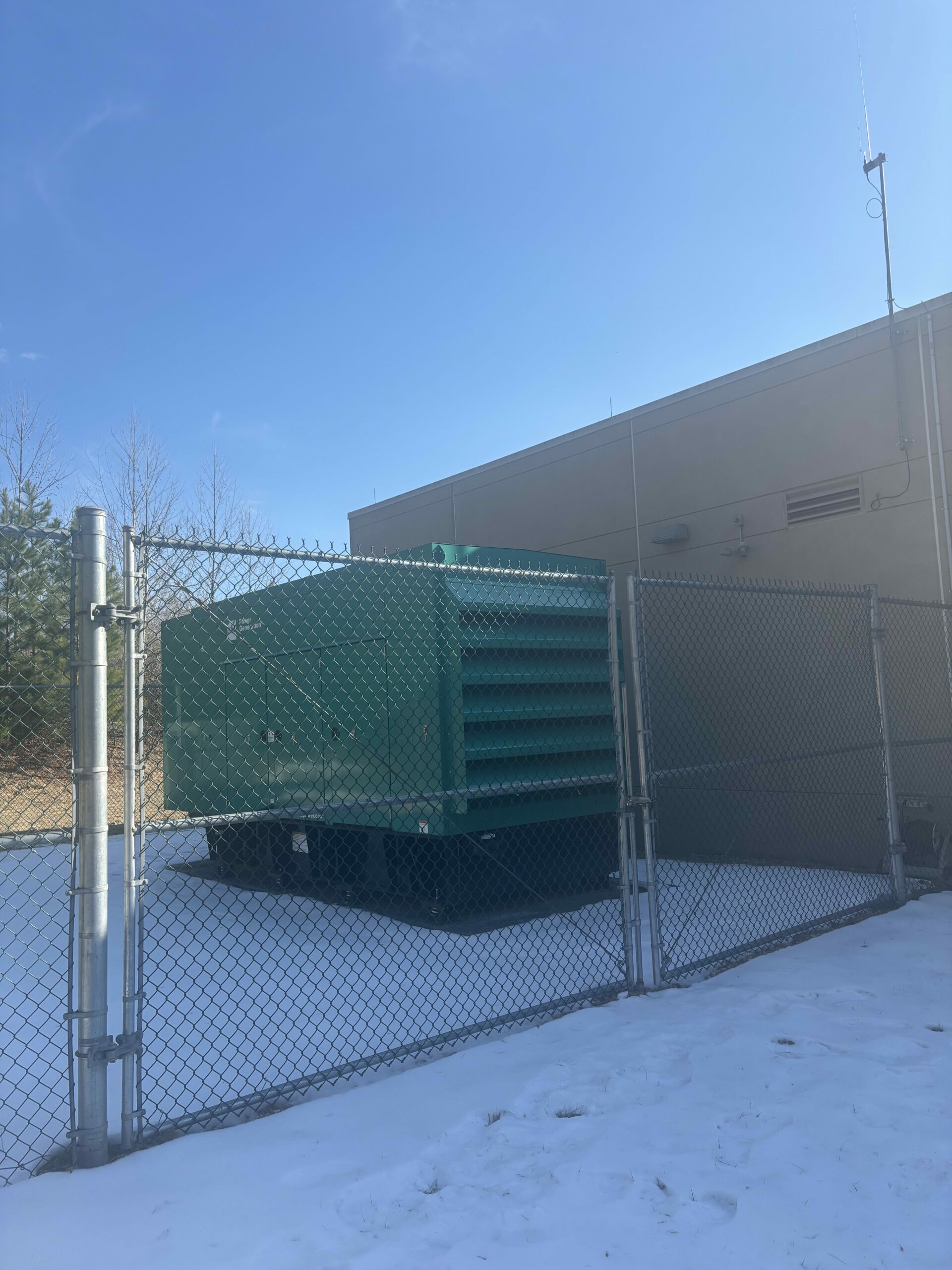
Generator outside Data Center
Who is this kid named Evan Lindner
Evan Lindner 1/23/2025
Evan Lindner is a student at Washington and Lee University in his junior year. He competes on the wrestling team in the 149 lb weight class where he was an NCAA National Tournament qualifier in 2024. Along with being on the wrestling team, he is an accounting major who participates in the Army ROTC program. Experiences in the past consist of studying abroad in Prague in the summer of 2023, studying abroad in France in the spring of 2024, and working an accounting internship that was headquartered in Boston. He grew up in New Milford, CT where he attended and graduated from New Milford High School.
The avenue I took to find information on myself was starting with a very basic search which was just my name, then narrowing it down by typing my name followed by the school I go to or the town I grew up in. While the general search gave me some results related to me, the more specific searches were much more effective in giving me more detailed and specific results.
Trying to find information about myself on the internet was not too hard in my opinion. Specifically, if you were looking to find information on my wrestling career, it is very easy but finding information outside of wrestling for me is more difficult. Even the information that wasn’t wrestling-related came from wrestling-focused articles other than my LinkedIn profile. I think that over time, my web presence has grown greatly due to wrestling. There was not too much on the internet in my childhood other than a couple of wrestling photos and a photo of my baseball team when I was 10. Through having a couple of successful outings in wrestling, my web presence is fairly dominated by that. I would say with the split between social media and web pages, 80% of my content is from web pages while 20% is from social media.
If a researcher was trying to find information on me, there is a lot that he would be missing out online by just browsing the internet. Since the content about me on the internet is mainly wrestling-focused, a researcher may come to think that I spend all my time focused on wrestling. Which is not true. Other hobbies of mine include traveling, French, hiking, content creation, and more. There is very little information on me doing any of these things on the internet and a researcher would never know this about me by just browsing the internet. This made me think about just how much is not on the internet still. Sure, we can learn a lot of skills through the internet but when trying to figure out things about a person, it is best to talk to them in person and not rely on the internet to research a person.
Citations used to write Bio
https://www.linkedin.com/in/evan-lindner
https://generalssports.com/sports/wrestling/roster/evan-lindner/16282
https://generalssports.com/news/2024/3/2/generals-qualify-for-nationals-earn-team-finish.aspx
Building My Knowledge? Or Wisdom?
Evan Lindner 1/22/2025
Digital Culture may have formed long ago but it is still changing and expanding at a rapid pace on the daily. The topic that I find most interesting around DCI is the use of AI and how this will affect human culture in the future. What will a day in life look like for a person in 20 years? Perhaps, you go to work in your self-driving car where you do all your work through glasses that have the power of 1 million modern computers. The world we live in today will be completely different as AI technology is just beginning and does not seem to be slowing down. The capabilities of AI and how this will affect culture are the ideas that I find to be the most fascinating.
Over the past 20 to 30 years, American culture has changed so drastically that when my parents tell me that they used phones that were connected to a wire, it doesn’t sound real to me. As a result of all these changes, a new type of culture has become popular called digital culture. Today, nearly everything we do in our daily lives revolves around technology and electronics. Growing up, after school, I would come home and turn on my Xbox to play with my friends and explore all types of new experiences. My social experiences as a kid were completely different from my parent’s experiences. A lot of the information and knowledge I receive today outside of school comes from YouTube or TikTok. Technological advancements over the past years have developed a completely new kind of culture that human civilization has never seen before. Another topic that I would like to learn more about is data protection. There has been a lot of controversy in recent news with data of people being sold or leaked, especially with apps like Facebook and TikTok. I would like to learn more about what companies do with the data that is collected.
What I want to get out of this class is to improve my ability to use and find digital information in a responsible way. There is so much information out there in the digital world but oftentimes it is hard to know which information is trustworthy and accurate. I think a critical skill for the workplace and life, in general, is the ability to filter through information on the digital web to find the information that you are looking for. Success in this class for me would be a greater understanding of how the digital web works in general and how I can use this knowledge in everyday life and tasks.